

This article previously appeared on Audiomack World.
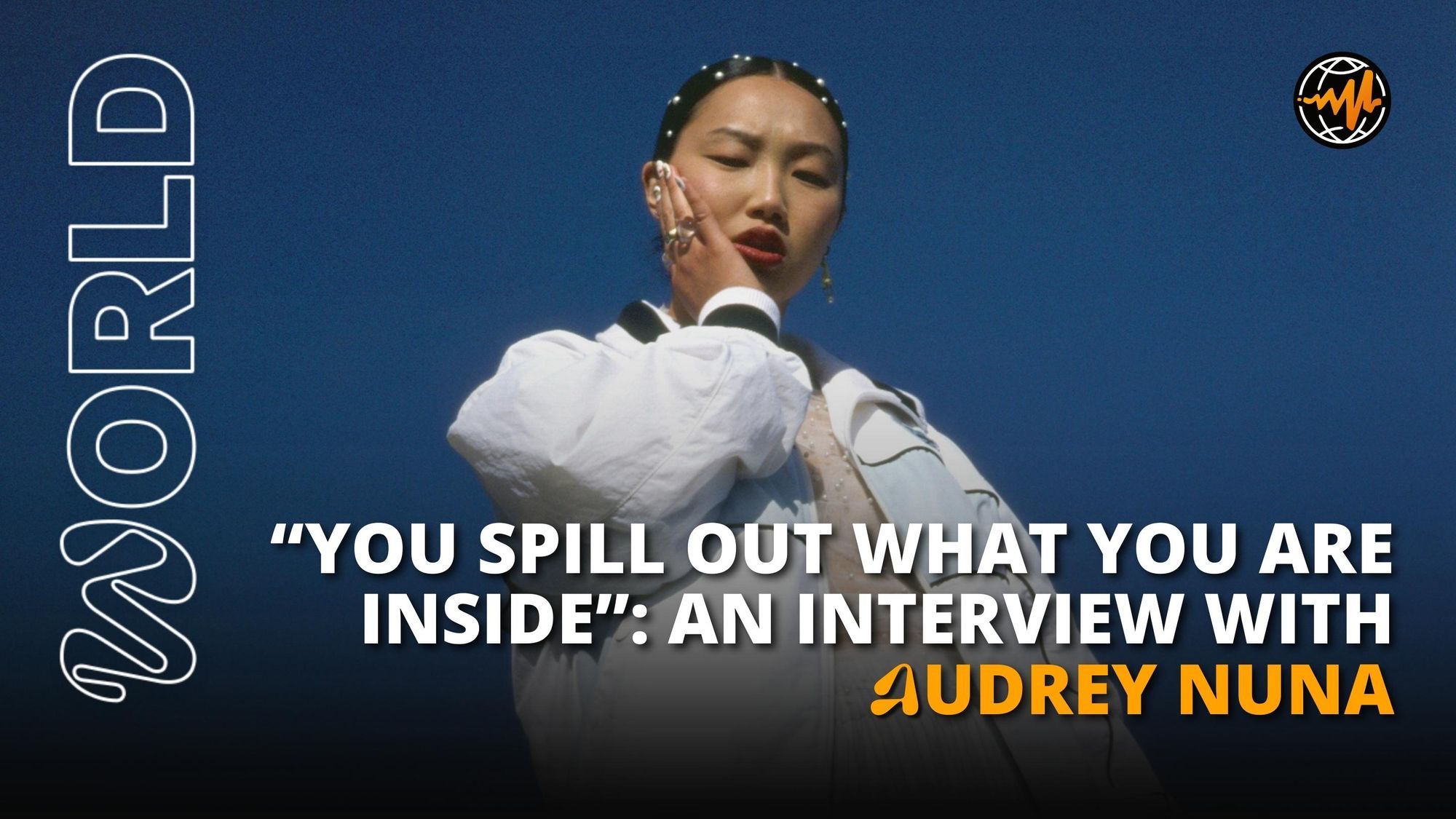
Born and raised in New Jersey, Korean American singer-songwriter Audrey Nuna has grown an avid following thanks to her range. She fuses haunting R&B, drumming techno, and hard-hitting 808s, becoming known for her experimental, sui-generis sound.
When listening to her latest project a liquid breakfast, released in 2021, it’s not hard to see the Audrey Nuna appeal. Ethereal songs like “Space” show off her innate vocal prowess while punchy trap tracks like “Damn Right” and Jack Harlow-featuring “Comic Sans” highlight her effortless flow. A feature in Marvel’s Shang-Chi and the Legend of the Ten Rings soundtrack on “Clocked Out!” with NIKI solidified her place as a rising star after the film’s monumental success.
These days, Nuna is working on balancing between putting out enough work and making sure she’s staying true to herself: “I think I’ve had to figure out the distinction between forcing something and looking for something that inspires you,” she tells Audiomack World. One way she does that is by “studying” other artists, further exploring her Korean heritage, and dabbling in other disciplines.
“My interest in [my heritage] would be reflected in my music,” Nuna says. “If that’s something I move towards, then it will definitely show in the music, whether it’s using more Korean samples or diving more into Korean cinema.” As Audrey Nuna roots deeper in her heritage, she’s keen on adding more Korean instruments to her music, too. “Hopefully no one reads this and does the same shit,” she teases.

The last year has been really crazy for you. What has this time felt like?
This year is a blur, honestly. I moved to LA from New York, which was a huge transition for me. I’ve just been figuring my life out here. It’s definitely a different ecosystem so I’m just getting accustomed to it. I’ve been working on music, trying to become a better human, working on my internal shit.
Trying to be a human is so important. I feel like I’ve made a lot more mental space to literally take care of myself, stuff that I think sometimes you put off when you get really caught up.
Oh, yeah. I definitely had to figure that shit out, just self-care in general. I’ve been living on my own as an entity for a few years now. But I had to relearn that shit because moving to a new city and not really knowing a lot of people—there aren’t people who are going to be making sure you’re taking care of yourself as much as in your hometown. I had to relearn all that: taking vitamins, working out, journaling, all that shit. I think it’s always cyclical. You always forget [to take care of yourself] because you’re dumb and then you remember because you’re smart.
That actually has made my creative process and life better. Everyone’s different, but for me, and can just see things better. It really makes a difference.
How has settling into LA been for you?
It’s just so different. I’m really trying to find my New York/New Jersey space within LA. I think here… everyone is here. And you just feel like you can be accessible to everyone if you allow that. But just protecting your energy in a way, only doing things you actually want to, and not getting caught up [are things I’m working on].
It’s very… industry here. Everything feels like a means to an end: there’s a reason we’re becoming friends, that we’re getting coffee. When you’re in Jersey and isolated, you don’t feel that pressure as much, which I miss, but I truly believe I can create that for myself here.
I also think part of it could be that you moved here in the midst of your career, whereas you built a whole life and community outside of that back on the East Coast.
For sure. Friends who don’t do music are actually super tight to have. Even friends who do music, but don’t do the same genre or something. Not to say that it’s not important to have that, but it’s important to have both.

What have you been working on now?
I’ve been working on making songs and some treatments, video ideas, always just simmering. I live my life and simmer and let things happen organically. When you feel like you’ve made enough things that are what you want to say, you just share it in the form of projects.
I always love the more organic stuff because I want to feel like my work is not being forced for any reason other than just being about it and saying what I need to say. When you try to crunch [creative work] into a business timeline, it kind of defeats the purpose for me, and it’s definitely something I’ve had to figure out—how to communicate and balance that. I do want to share my music and put things out, but I think that it’s worth the time that might take.
Where have you been finding inspiration?
Going to see other forms of art helps. I just saw the play Who’s Afraid of Virginia Woolf? yesterday at Geffen Playhouse, which is pretty sick. Just watching people do things that are not in your lane, but you can still learn from it.
I also think having an internal routine has made me more open to seeing more ordinary things that inspire me. That’s always been a thing for me but sometimes you gotta clean out the pipes, I guess.
Also going to see shows has been super inspiring for me. To see other artists do their thing because, in a way, that is a different discipline. Everyone has their own craft and what they’re working on. Went to see Bakar two weeks ago. That was tight. The Kendrick [Lamar] album has been so inspiring. Just studying, studying other people, dead or alive, and what they’re up to.
From Squid Game to Minari to Pachinko, there’s been so much great Korean media that’s come out in the last couple years. Have you been keeping up with it? How do you feel about it all?
It’s sad I actually didn’t even finish Squid Game. I have commitment issues with shows. [Laughs] But Burning, that Korean film, was really fire. Of course, Parasite. Minari was so good. Oh my God. I bawled my eyes out. I don’t cry a lot—for movies, especially—and I was bawling.

Are there ways that you bring your heritage into your work?
I think just existing alone and writing, being a writer and artist, you just spill out what you are inside. Being a Korean American woman in her early 20s, in the year 2022—that is going to show no matter what. It happens naturally. I can’t stop it, even if I wanted to.
I am more interested in exploring Korean culture than I was two years ago, even. Every year, it’s more. I’ve only been to Korea three or four times in my whole life. I sometimes feel a little bit disconnected to certain things. Not that I didn’t grow up around Korean American customs, which I did. But there are still a lot of things I’ve yet to learn.
What are some of the things you want to dive into?
I’m interested in diving into more traditional Korean instruments. There’s some sick stuff. I think there are a lot of interesting sounds that are outside what’s popular right now that could be tight to repurpose. Like, Pansori drums and a bunch of other instruments.
By Eda Yu for Audiomack