

This article previously appeared on Audiomack World.
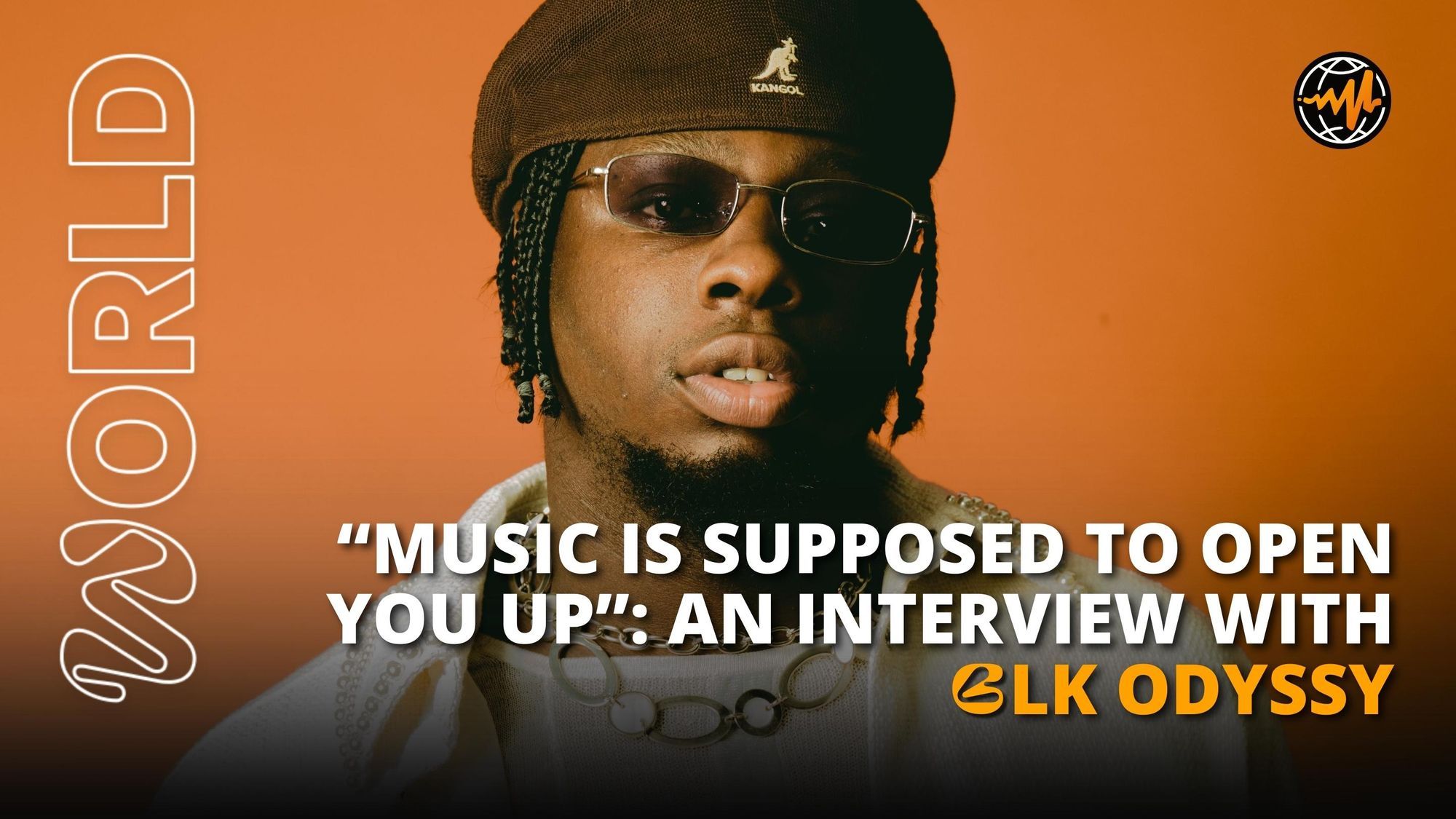
BLK ODYSSY knew his debut album BLK VINTAGE would be a slow burn. When we connect for our interview in early January 2022, he carefully takes the time to explain the importance of making music to live with, not just to chase virality. There’s a weight to his words that is mirrored in the album, which recounts the poisonous trauma of being a Black man in America. With its jazzy tones and deeply rich soundbeds, BLK VINTAGE is a loaded freight train, chugging along as it communicates BLK ODYSSY’s broader mission to heal and inspire feeling in his community.
Originally getting his start in the Americana scene of Austin, Texas using the moniker Sam Houston, BLK ODYSSY changed his name and established himself as an artist with the space to discuss the difficult topics (police brutality, for one) found on his debut. From being exposed to a duality of music between his divorced parents—religious music from his mother, and gritty rap from his father—to having a real awakening once Kendrick Lamar’s seminal To Pimp a Butterfly dropped, the BLK ODYSSY project is about using music to deprogram the listener.
“I’ve spent so much time in my life having anxiety if other people are okay,” BLK ODYSSY tells Audiomack World. “That’s what chewed away at my own mental health. For me, knowing that I can help create a better world for other people around me, and the people I can reach, that’s how I take care of myself. I’m not worried about riches, fame. That stuff is whatever. The fact that something I’m doing can help the people I care about? That’s how I help myself.”
BLK ODYSSY’s musical education bubbled up from a speaker and reached him, unassuming, in the backseat of his dad’s car while zooming down the New Jersey Turnpike. These early musical memories propped open his mind. Listening to BLK VINTAGE, it’s easy to imagine a world where this album takes on the role the classics did for BLK ODYSSY all those years ago.

What’s your earliest memory of music as powerful?
I used to sit in the back of my dad’s ‘94 maroon Volvo, and this memory stuck with me so deeply. I was just drowning in his music in the back of his car.
I remember when we’d be driving on the Turnpike in New Jersey and he’d play OutKast and Erykah Badu. If you put on a song, and before the song was over, you’d skip to the next song, he’d get so annoyed. He was very much an album listener. At an early age, I was exposed to listening to the real shit front-to-back. He did that for years, the same albums over and over again. Those are the sounds that took up real estate in my mind.
I have a great history of being exposed to music on the NJ Turnpike, too.
It’s just something about it. Do you remember this one section where they used to burn the garbage? It had a particular smell. I even remember that.
I grew up understanding music was a privilege, and I’m wondering if you had that experience, too?
My parents were divorced but they were co-parenting. When I was with my mom, she played music but it was religious. When I did get with my dad, and he would play all the broad, crazy topics my mom didn’t want me to listen to, in that regard it was a privilege for me.
You’ve undergone a name change that underscores the importance of your debut album. What’s the one question you wish people would ask about this pivot? How would you answer?
I wish I never made the decision [to have my original stage name] in the first place. I am having a difficult time explaining what that name meant, but there’s no story at all. I was in high school, I put out a track under the name my homies called me. This girl told me, “No one’s gonna listen to that.” Then she suggested Sam Houston. “Alright, cool.” Then, I moved to Texas my senior year of high school, where Sam Houston was a huge war hero and a racist. I had a hard time with that name.
I would’ve changed it as soon as I got to the music scene in Austin, but what I noticed was there wasn’t a lot of Black culture represented at the music scene. I figured I had to keep that name to fit in with the Americana vibe that was here. I felt that name fit with what I was trying to be when I first moved to Austin—that’s a deeper-rooted issue. It was a part of me trying to water down my Blackness to fit into what was already working here. That’s why I kept that name.
When I started working on BLK VINTAGE, I really didn’t want that name. It’s not my name. None of my friends back home call me that. But I had built this buzz around town, so it was difficult. My manager told me, “If you’re gonna change your name, change it now.”

Good for you for saying, “This is my name.”
It was a part of this whole redesign of myself, to be honest. I’ll be completely real. Everything I was doing in Austin was very one-dimensional. I figured I would be this Black rock guy here in town, I would get a co-sign, and next thing you know I’d be in. But I don’t think that sound was true to me and I wasn’t able to express myself clearly because of the demographics in that genre. It’s not what people want to hear.
I would describe BLK VINTAGE as urgent in nature. What imperative do you feel when you’re making music?
When I started to get a deeper understanding of music in 2015, listening to To Pimp a Butterfly… I dealt with my own trauma and I never knew how to deal with it. I listened to that music and it resonated with me so deeply. That was my first time having a visceral moment, where I didn’t just listen to the music—it drew me in on a different level.
That’s the moment I figured out that artist voices are so important. That was my first therapy session for the trauma I had growing up. It was at that moment that it was like, “It’s imperative for me as an artist to do that for someone else.” I had to pay it forward.
I want to point to this quote you have in the PR: “The Black youth has been poisoned numb because of the shit we have to deal with. I want to speak to our experiences and let people know it’s okay to shed that layer and really, truly feel.” How do you personally escape that numbness?
Music brings feeling back into the nerves for me. The numbness comes from the repetition of things that go on in the community, to the point where you think it’s normal. That’s what I meant—you’re numb to all the craziness. It’s a conditioning of the brain where you just settle for that mindset.
For me, there was an awakening, which is what I wanted to portray on the album. BLK VINTAGE starts with me speaking about being in that numb state, with songs like “NINETEEN EIGHTY.” Thankfully, I’m only 25 and I was able to turn around and as the project goes on, “GHOST RIDE” is the exact opposite of “NINETEEN EIGHTY.”
It took music and a person like Kendrick Lamar to articulate some of those things for me, to be able to wake up myself and think a little bit higher.

Music is a means of deprogramming people. It’s the gateway to the revolution.
I agree, and I like that word: deprogramming. Music is supposed to open you up.